 Published on: August 19, 2026
run-time: 26:10
Published on: August 19, 2026
run-time: 26:10
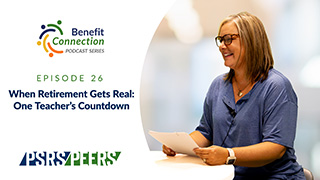
Join us for a candid, real-world conversation with teacher Kristin Buschjost, who knows what retirement planning feels like in the middle of an active career.
Kristin shares how a career change prompted her to focus on her future. Hear the practical steps that helped her shift from “I’ll figure this out someday” to confident, informed planning. Whether you’re early in your career or well into the middle stretch, Kristin’s story offers motivation and useful tips for making the most of your PSRS/PEERS retirement.
 Published on: August 05, 2026
run-time: 18:12
Published on: August 05, 2026
run-time: 18:12
Unexpected job offers. Exceeded limits. Missing hours.
This Benefit Connection podcast takes you straight into the investigation room as our hosts unravel cases involving retirees who return to work. Learn how these retirees can avoid putting their benefits at risk.
Listen for clues on post-retirement job offers, limits on salary and hours, and other common slip-ups. Solve the mysteries with us.
 Published on: July 22, 2026
run-time: 19:32
Published on: July 22, 2026
run-time: 19:32
Some members have service in both PSRS and PEERS. This can happen when someone begins their career as non-certificated and then obtains their DESE-issued teaching certificate or when a PEERS member begins working as an adjunct professor in a PSRS-covered position at a community college. In this episode, member education expert Jennifer Rissmiller breaks down how the two systems interact and what members should know as they plan for retirement.
You’ll learn:
- How members may earn service in both systems
- How vesting works and why reaching five years in each system matters
- How service can be recognized for retirement eligibility
- Options members have at retirement, including receiving two separate benefits
- When members might choose to refund, roll over, or purchase service
Jennifer also walks through real-life scenarios that show how these rules apply in real life. Listen now!
 Published on: June 24, 2026
run-time: 12:44
Published on: June 24, 2026
run-time: 12:44
The Partial Lump Sum Option is one of the most frequently asked-about features of PSRS/PEERS retirement, and this episode breaks it down so you can understand it.
Host Susan Boessen and guest Connor James explain:
- What PLSO is and how it works
- Eligibility requirements, including working three years beyond normal retirement
- How lump-sum amounts are calculated
- Options for receiving PLSO funds
- Tax considerations and potential penalties
- The long-term impact on monthly benefits and COLAs
If you’re exploring retirement options or want to understand how PLSO might fit your financial goals, be sure to listen!
 Published on: April 01, 2026
run-time: 14:12
Published on: April 01, 2026
run-time: 14:12
Retirement planning gets easier when you understand what’s fact. In this episode, we tackle some of the most common misconceptions our members hear. This “school chatter” spreads easily and can lead to confusion or even missed opportunities when it comes to your PSRS/PEERS retirement. We’re breaking each rumor down to give you the facts.
Tune in for simple explanations, helpful examples, and guidance to make informed decisions about your retirement.
 Published on: November 19, 2025
run-time: 18:05
Published on: November 19, 2025
run-time: 18:05
We’re busting retirement myths! Paula McKinney, a senior PSRS/PEERS information center counselor, joins host Susan Boessen to separate fact from fiction. From rumors about losing your contributions to confusion about summer school, we’re setting the record straight so you can make the best retirement decisions.
 Published on: August 27, 2025
run-time: 23:22
Published on: August 27, 2025
run-time: 23:22
In this episode, Susan Boessen welcomes PSRS/PEERS Member Education Supervisor Amanda Wooten to the podcast and they discuss some of the most commonly asked questions we hear from our members.
Disclaimer: The opinions expressed in this podcast do not necessarily reflect the views of the Public School and Education Employee Retirement Systems of Missouri. Any examples used are for demonstrative purposes and are not designed to be member specific. This podcast is intended to serve as a resource and is not a substitute for the law. If differences are stated between this podcast and the law, the law must prevail.
