April Board Meeting Summary
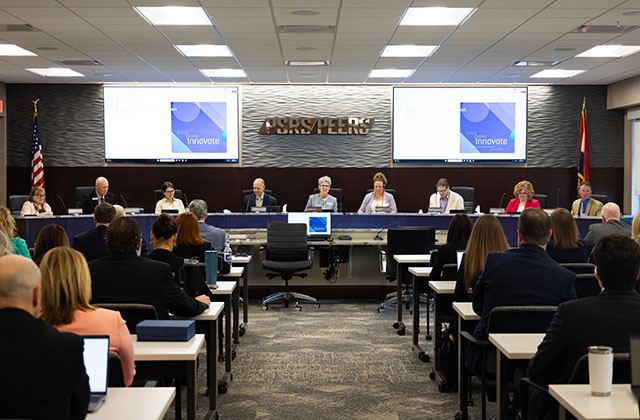
The Public School and Education Employee Retirement Systems of Missouri (PSRS/PEERS) Board of Trustees convened on April 19-20, 2026, at the PSRS/PEERS offices at 3210 W. Truman Blvd., Jefferson City, Missouri. In attendance were Board members Beth Knes, Dr. Eric Park, Allie Gassmann, Katie Webb, Chuck Bryant, Dr. Nate Moore, and Amanda Perschall. Also present were Executive Director Dearld Snider, Chief Operating Officer Sarah Swoboda, Chief Investment Officer Craig Husting, Chief Counsel Mike Moorefield, Director of Internal Audit Jeff Hyman, Chief Financial Officer Brandon Robertson, Director of Human Resources Michelle Varcho, Director of Member Services Nicole Hamler, Director of Employer Services Stacie Verslues, Chief Technology Officer Lisa Scheulen, Director of Communications Susan Wood, Chief Information Security Officer Jake Woratzeck, Director of Executive and Board Administration Jennifer Martin, and various other PSRS/PEERS staff members.
Sunday, April 19, 2026: BUDGET AND AUDIT COMMITTEE
Approval of Minutes
The open session minutes from the Dec. 15, 2025, Budget and Audit Committee meeting were approved by unanimous vote.
Preliminary 2026-2027 Budget Discussion
Brandon Robertson, Sarah Swoboda, and Michelle Varcho, all from PSRS/PEERS, led a compensation and budget discussion in preparation for the upcoming fiscal year. Swoboda and Varcho reviewed the Board of Trustees' compensation strategy by highlighting the purpose, principles, and overall approach of the strategy. As part of the Board's compensation strategy, an independent compensation study is conducted at least every three years to ensure the Systems maintain external competitiveness. Analysis reaffirms the importance of maintaining a competitive and market-aligned compensation strategy to attract and retain the highly skilled staff necessary to support the mission of PSRS/PEERS. Annual market data reviews, combined with periodic in-depth compensation studies, continue to validate that our current approach is effective and aligned with industry standards. This year's off-cycle IT and Information Security compensation study indicated only minimal adjustments were needed, reflecting strong alignment with market expectations.
Robertson described the annual budgeting policy and process, which begins in the second quarter of each calendar year. Key initiatives — including technology investments, security enhancements, communications improvements, and capital maintenance — are incorporated to ensure continued operational excellence. The annual operational budget – including personnel costs representing roughly two-thirds of the total but also including professional services and other operation expenses – remains stable. He then presented a high-level estimate of the total fiscal year 2027 budget and provided information on the primary drivers of the administrative and investment components of the budget. He concluded by circling back to the compensation strategy, cost of labor data, and IT compensation study previously presented by Swoboda and Varcho to present the proposed adjustments to staff personnel salaries for fiscal year 2027 for the consideration and direction of the Board.
Public Comment
None
INVESTMENTS
Safe Assets
Craig Husting and Jessica Wilbers from the PSRS/PEERS investment staff reviewed the Systems' Safe Assets portfolio, including program objectives, guidelines, and long-term results. The 10-year annualized return for the Safe Assets composite for the period ended March 31, 2026, was 1.1%.
Private Equity and Private Credit Review
John Tuck, Dan Case, Ben Frede, Anthony Vikhter, Paul Katzfey, and Connor Quinn from the PSRS/PEERS investment staff provided education on the Private Equity and Private Credit programs. Additionally, the team provided long-term investment results. The five-year annualized return for the Private Equity composite for the period ended Dec. 31, 2025, was 12.8% and the five-year annualized return for the Private Credit composite for the same period was 10.9%.
Public Comment
None
Monday, April 20, 2026: REGULAR BOARD MEETING
SYSTEM OPERATIONS
Approval of Minutes
The open session minutes from the Feb. 2, 2026, Board meeting were approved by unanimous vote.
Order of Business
The order of business was approved with no changes.
Certification of Election Results
Jennifer Martin from PSRS/PEERS shared the trustee election results. This was an uncontested election with Allie Gassmann winning the open PEERS position and Amanda Perschall winning the open PSRS position. Their terms will run from July 1, 2026, through June 30, 2030. The Board approved the certified election results by unanimous vote.
Election of Chair and Vice Chair
Beth Knes was elected to serve as chair of the Board, and Dr. Eric Park as vice-chair of the Board for the period of July 1, 2026, through June 30, 2027. Each was elected by unanimous vote.
Set Interest Credit Rate for June 30, 2027
Each June 30, interest is credited to the accounts of active members at the rate set by the Board of Trustees. If a member requests a refund of their contributions, any accumulated interest is paid as part of this refund. If a member retires from the Systems, the amount of interest credited to the member's account does not affect the retirement benefit calculation, but if there is an unused balance in the member's account at the death of the member and any Joint-and-Survivor benefit plan beneficiary, the remainder is paid in a lump sum to the residual beneficiary. Robertson presented information on the current interest rate environment and historical interest rates. Staff recommended the interest rate credited to the accounts of active members remain at 3.5% effective for fiscal year 2027 (July 1, 2026 – June 30, 2027). This rate will be used throughout the fiscal year to facilitate necessary member account corrections and will be used to credit active member accounts on June 30, 2027. The Board of Trustees approved staff's recommendation by unanimous vote.
Set Reinstatement and Purchase Interest Rate for Fiscal Year 2027
Robertson noted that according to Board Regulation (16 CSR 10-4.012 (4)), prior to July 1 each year, the Board of Trustees shall establish a "purchase rate" of interest based on the actuarially assumed rate of return on invested funds of the Retirement Systems. The purchase interest rate shall apply to any amount due for reinstatement of service or for the purchase of service, except as otherwise specified by law. Staff recommended the purchase interest rate be set at the current assumed rate of return of 7.3%. The Board of Trustees approved staff's recommendation by unanimous vote.
Other
Dearld Snider with PSRS/PEERS presented a plaque to Monica Cain for her dedication and service to PSRS/PEERS. Cain will retire effective June 1, 2026.
INVESTMENT REPORT
Ongoing Investment Activity
Craig Husting from PSRS/PEERS and Michael Hall from Russell provided a market overview including detailed investment returns for several stock and bond indices for the five-year period and fiscal year through March 31, 2026. Husting provided a broad overview of the PSRS/PEERS portfolio structure, including an estimated asset allocation for PSRS/PEERS as of March 31, 2026. Husting stated that the PSRS/PEERS preliminary (unaudited) investment return for the fiscal year so far (July 1, 2025, through March 31, 2026) was approximately 5.4%.
Approve Changes to Investment Policy
The Investment Policy was originally adopted in 1995. The investment staff periodically conducts a full review of the Investment Policy and recommends changes to the Board. The last full review was conducted in August 2025.
Husting discussed policy changes made due to the new asset allocation that was adopted by the Board in February 2026. Specifically, the changes permit 3% asset allocation leverage. Additionally, there were changes made to the Public Risk Asset Implementation Manual. The section on approved investment strategies was clarified to reflect current practices.
The Personal Trading Policy was also updated to reflect that only non-commercially available securities must be pre-cleared (prior to trading) by staff.
Following discussion, the proposed Investment Policy changes were approved by unanimous vote.
REPORT OF THE ACTUARY
Experience Study Review
The 2026 study covers experience from July 1, 2020, to June 30, 2025. The Board will consider the findings to decide on any changes to actuarial assumptions and methods selected by the Board and described in its funding policy. Those assumptions and methods will then be used in future actuarial valuations and analysis. No Board decisions are required today; adoption of any changes is scheduled for June 2026
Key Areas Reviewed
The study examines four main areas:
- Economic Assumptions: Inflation, expected return on assets, cost-of-living adjustments (COLAs), and payroll growth.
- Demographic Assumptions: Individual salary increases, mortality (life expectancy), retirement, withdrawal (turnover), and disability.
- Other Assumptions: Administrative expenses, member contribution interest, refund of contributions, return of unpaid contributions, form of payment, and beneficiary assumptions.
- Actuarial Methods: Actuarial cost method, asset smoothing, unfunded liability amortization, and Actuarially Determined Contribution (ADC) rate calculation methods.
Major Findings and Recommendations
- Economic Assumptions
- Inflation: The long-term inflation assumption is recommended to increase from 2.0% to 2.25%, reflecting forecasts from investment advisors and economists. A slightly higher rate is used for the next five years to account for recent inflation trends.
- Expected Return on Assets: The assumed long-term investment return remains at 7.3%, consistent with investment advisor recommendations presented in April.
- COLA: The cost-of-living adjustment is recommended to be 2% for January 2027, then gradually decrease to a long-term rate of 1.45%. This is based on inflation projections and the Board's policy.
- Payroll Growth: Payroll growth assumptions are increased to reflect the increase in the underlying inflation assumption and recent trends in real salary growth. For PSRS, the recommended assumption is 2.60%; for PEERS, 3.00%.
- Demographic Assumptions
- Salary Increases: Assumptions are adjusted upward to reflect the increase in underlying inflation assumption and recent trends in real salary growth, but tempered by state-level revenue and education funding considerations.
- Mortality: This assumption is updated to use the latest large-scale public pension mortality study and resulting tables, with adjustments based on the actual experience of PSRS and PEERS members.
- Retirement Rates: This assumption was increased at certain age and service milestones, particularly when members first become eligible for unreduced benefits. This aligns with observed higher retirement rates at these points.
- Withdrawal and Disability: Withdrawal (turnover) rates are generally increased to reflect higher-than-expected departures, while disability rates are decreased due to fewer observed cases.
- Actuarial Methods
- Asset Smoothing: The method for valuing assets is refined to use market value as the basis for expected returns (versus the actuarial / smoothed value), which may increase volatility but better reflects actual market conditions and industry practice.
- Amortization Period: The period for paying down unfunded liabilities is shortened from 30 years to 20 years, aligning industry trends addressing intergenerational equity and negative amortization.
- Financial Impact
- PSRS: Utilizing the June 30, 2025, actuarial valuation for comparison, the recommended changes increase the actuarial accrued liability by $953 million and the normal cost by $44 million. The funded status decreases from 89.1% to 87.9%, and the ADC rateADCrate rises from 27.13% to 28.58%.
- PEERS: Utilizing the June 30, 2025, actuarial valuation for comparison, the recommended changes increase the actuarial accrued liability by $82 million and the normal cost by $6 million. The funded status drops from 89.9% to 89.1%, and the ADC rate rises from 12.93% to 13.23%.
- Timeline and Next Steps
- The Board is encouraged to review the findings and provide direction on any additional analysis needed. Formal adoption of new assumptions is planned for the June 2026 meeting
- Final reports and recommendations will be available in June 2026, with any adopted changes reflected in the June 30, 2026, actuarial valuation.
In Summary
Periodic experience studies ensure that the retirement systems' actuarial valuations and financial projections are based on the current economic data and member behaviors. The recommended changes are designed to keep the systems on a sound financial footing, reflecting both recent experience and best practices. The Board's review and eventual adoption of these recommendations will help maintain the long-term sustainability of benefits for Missouri's public school and education employees.
MANAGEMENT REPORT
Employer Services Update
Stacie Verslues from PSRS/PEERS provided a comprehensive overview of the full reporting lifecycle that school districts follow from the moment an employee is hired until retirement and even into post-retirement employment. Verslues introduced the key individuals involved in the process, including the Employer Services team and district payroll staff, and explained the foundational steps of enrollment, the process of payroll reporting, as well as the importance of ongoing education, including webinars and conferences, to help districts stay current with reporting requirements. Additional focus is placed on mid-year and end-of year audits, where the Employer Services team reviews salary accuracy, service credit, insurance reporting, and outstanding action items to maintain compliance. Finally, Verslues outlined the critical responsibilities related to retirement, such as reporting final pay and termination dates promptly, understanding Final Average Salary Cap rules, and properly tracking members who return to work after retirement.
Verslues highlighted the collaborative, detail-oriented nature of employer reporting and emphasized that the Employer Services team supports districts at every step to ensure accuracy, timeliness, and smooth transitions for all members.
Legislative Update
Mike Moorefield from PSRS/PEERS and government relations consultant Doug Nelson presented the April legislative update.
Moorefield and Nelson gave the Board an overview of the proposed state budget and other notable legislation moving through the General Assembly with four weeks left in the 2026 legislative session.
Moorefield and Nelson discussed PSRS/PEERS' priority tracked legislation. This includes three bills that could affect Investment Mandates/System Governance. Other priority bills PSRS/PEERS is tracking are HB 2091, which expands PEERS Critical Shortage Employment; HB 2095 and SB 1779, which modifies the statutorily mandated COLA cap; HB 2144, which increases the PSRS death benefit; HB 2396, which changes WAR limits; HB 3079, which moves speech language pathologists to PSRS; and SB 1258, which raises the multiplier for PSRS retirees with at least 33 years of service to 2.6%.
At the bill filing deadline, more than 3,000 bills and resolutions have been filed by the 2026 General Assembly. PSRS/PEERS is tracking more than 150 bills.
Key Accomplishments
Sarah Swoboda reviewed key accomplishments since the February Board Meeting.
Staff initiatives focused on strengthening culture and operations, including "Coffee and Culture with Dearld," which helps new hires learn about the mission, values, and leadership vision of PSRS/PEERS.
Operational updates included completing the Accounting Suite project and conducting a successful IT disaster recovery exercise that tested major systems and firewall redundancy, and receiving a strong, positive cybersecurity assessment from an external penetration testing firm.
The organization also rolled out Microsoft Copilot to all staff, pairing new AI tools with required training to ensure responsible and effective use. Additional achievements included hiring a new building engineer, Kevin Evers, and advancing website accessibility work aligned with WCAG standards.
On the investment side, teams launched an automated document-ingestion system using Canoe AI, reducing manual processes and improving workflow efficiency.
Lastly, investment team member John Tuck was recognized as a 2026 "Next Elite" by Markets Group for excellence in the investment field. Together, these accomplishments reflect continued progress in operational readiness, staff development, technology modernization, and investment excellence.
CPI-U Update
Dearld Snider reviewed the COLA policy that was set by the Board of Trustees at their Nov. 3, 2017, meeting. According to the policy, COLAs may be granted based on the CPI-U as follows:
| CPI-U | COLA per Board-Approved Funding Policy |
|---|---|
| Less than 0.0% | 0.0% |
| 0.0%-2.0% | 0.0% when CPI-U is cumulatively below 2.0% |
| 0.0%-2.0% | 2.0% when CPI-U cumulatively reaches 2.0% or more* |
| 2.0%-5.0% | 2.0% when the CPI-U is at least 2.0%, but less than 5.0% |
| 5.0% or more | 5.0% |
| *resets cumulative calculation after a COLA is provided | |
Snider explained that the Consumer Price Index for Urban Consumers (CPI-U) is calculated by the Bureau of Labor Statistics (BLS). The CPI-U is the measure of the change in prices of goods and services purchased by urban consumers between any two time periods. PSRS/PEERS' regulation requires that the period for the CPI-U calculation used in the determination of a COLA be from June to June. Based on the values provided by the BLS, the CPI-U is up 2.37% through March 31, 2026. The CPI-U for April 2026 will be released May 12, 2026.
| Month | Index Values | ||
|---|---|---|---|
June 2025 | 322.561 | Month | To-Date |
July 2025 | 323.048 | 0.15% | 0.15% |
August 2025 | 323.976 | 0.29% | 0.44% |
September 2025 | 324.800 | 0.25% | 0.69% |
October 2025 | not released due to government shutdown | ||
November 2025 | 324.122 | -0.21% | 0.48% |
December 2025 | 324.054 | -0.02% | 0.46% |
| January 2026 | 325.252 | 0.37% | 0.83% |
| February 2026 | 326.785 | 0.47% | 1.31% |
| March 2026 | 330.213 | 1.05% | 2.37% |
| April 2026 | |||
| May 2026 | |||
| June 2026 | |||
Public Comment
None
Other
None
Closed Session
The Board went into closed session at 12:04 p.m.
Adjournment
The Board adjourned at 2:30 p.m.
This summary is not the official minutes of the PSRS/PEERS Board of Trustees meeting. The official minutes will be approved at the next PSRS/PEERS Board of Trustees meeting and will be posted to our website at that time.